
 Student Login









Master in Teaching

Next start:
January 2027
Format:
Mixed Mode
Total Credits: 54-75

Tuition:
$635 per creditMake an Impact on Today’s Youth
Program Overview
The Master in Teaching program is designed for people who hold a bachelor’s degree in any field and are ready to become certified teachers. Through the program, you can earn a master’s degree while becoming eligible for a Washington State Residency Teaching Certificate.
Choose from nine endorsement combinations, with both single- and dual-endorsement pathways available.
You’ll build classroom experience progressively through four internships and student teaching. The program includes more hands-on classroom experience than the Washington State minimum requirement, giving you opportunities to apply what you learn, develop your teaching practice, and earn academic credit along the way.
Skills You’ll Gain
Throughout the MIT program, you’ll develop skills and knowledge in:
- Engage students through active learning strategies and interactive technology.
- Strategies for co-creating learning spaces that are culturally-sustaining and identity-affirming for all students
- Student-centered instructional design, implementation, and assessment practices
- Inquiry and project-based learning methods
- Identity development and deepening your own equity literacy
- Science of Reading pedagogy
- Historical, legal, and sociopolitical foundations of the educational system in the United States
our Mission
Our mission is to prepare thoughtful, effective educators through relevant, relationship-based learning grounded in culturally sustaining and identity-affirming practices. Future teachers develop the knowledge, instructional strategies, and self-awareness needed to create equitable, engaging, and high-quality learning experiences for every student.
- Designed for busy professionals
With online and Saturday classes, the MIT program is designed to fit around your schedule. - Dedicated Faculty Mentors
You’ll work with mentors throughout your coursework and internship experiences. - Mixed Mode MIT
We combine online learning with in-person classes.giving you the flexibility of online coursework along with the connection and support of local faculty.
Program Highlights

Endorsement Areas
Choose up to two endorsement areas, including Elementary Education, Special Education, Multilingual Education/ELL, and Reading. Through coursework and hands-on classroom experience, you’ll learn to create equitable, engaging learning environments where students feel seen, supported, challenged, and inspired.
IDA Accrediation
The MIT Reading endorsement is accredited by the International Dyslexia Association (IDA), reflecting the program’s alignment with research-based approaches to literacy instruction. The Reading endorsement can be paired with:
- Elementary Education + Reading
- Special Education + Reading
- Multilingual/ELL + Reading
Practitioner Faculty
The faculty in our MIT program have real-world experience and can share their knowledge of strategies and best practices you’ll find valuable in the classroom.
Course Requirements
There are nine endorsements within the Master In Teaching degree that you can choose to study. Each pathway will lead toward becoming a certified teacher.
Master in Teaching Common Core Requirements
34 credits
ETC 519 Curriculum and Instruction Methods (3)
ETC 515 Assessment and Feedback (3)
ETC 501 Human Growth and Development (2)
ETC 553 Public School Law (2)
ETC 507 Social Justice, Equity, and Diversity (3)
ETC 595 Classroom Management, Assessment and Evaluation (3)
ESP 525 Behavior Analysis and Management (3)
ETC 567 Instruction and Assessment in Literacy I (3)
ETC 513 Mathematics Methods I (3)
ETC 609 September Experience (1)
ETC 610 Internship I (1)
ETC 625 Internship II (1)
ETC 627 Internship III (2)
ETC 680 Teacher Research I (1)
ETC 683 Teacher Research II (1)
ETC 692 Capstone Introduction (1)
ETC 693 Master Project: Capstone (1)
In addition to the core MIT requirements, each Endorsement option has additonal credit requirements.
Emphasis in Elementary Education
20 credits
ETC 514 Mathematics Methods II (3)
ETC 522 Social Studies Methods (3)
ETC 538 Science, Technology, Engineering and Math Concepts (3)
ETC 585 Special Education and Special Programs (2)
ETC 570 Instruction and Assessment in Literacy II (3)
ETC 675 Student Teaching (6)
Emphasis in Elementary Education and Reading
36 credits
ERL 565 The Scientific Foundations of Literacy
3
ERL 574 Language Development, Phonological Awareness, and Phonics
3
ERL 577 Fluency, Vocabulary, and Comprehension
3
ERL 578 Instruction, Assessment, and Intervention in Literacy
3
ERL 583 Writing Instructions and Integration
3
ETC 514 Mathematics Methods II
3
ETC 522 Social Studies Methods
3
ETC 538 Science, Technology, Engineering and Math Concepts
3
ETC 585 Special Education and Special Programs
2
ETC 608 Practicum
1
ETC 570 Instruction and Assessment in Literacy II
3
ETC 675 Student Teaching
6
Emphasis in Elementary Education and Special Education
41 Credits
ESP 529 Fundamentals of the IEP Process
3
ESP 540 Teaming and Transitions
1
ESP 528 Student Assessment and Evaluation
3
ESP 536 Behavior Analysis II *
1
ESP 541 Exceptionality in Special Education
2
ESP 558 Instructional Accommodations and Modifications for Special Ed
3
ESP 535 Low Incidence Disabilities
2
ETC 514 Mathematics Methods II
3
ETC 522 Social Studies Methods
3
ETC 538 Science, Technology, Engineering and Math Concepts
3
ETC 585 Special Education and Special Programs
2
ETC 570 Instruction and Assessment in Literacy II
3
ETC 675 Student Teaching
6
ESP 642 Student Teaching in Special Education
6
Emphasis in Multilingual-English Language Learners
20 Credits
ESL 551 Researching: History of Bilingual Education and Advocacy
3
ESL 542 Identification, Assessment and Evaluation of ELL Students
3
ESL 544 Evidence-Based Instructional Practices for ELL
3
ESL 541 Linguistics for ELL Teachers
2
ESL 543 Culturally Responsive and Equitable Practices for ELL Teachers
3
ETC 675 Student Teaching
6
Emphasis in Multilingual-English Language Learners and Reading
36 Credits
ESL 551 Researching: History of Bilingual Education and Advocacy
3
ESL 542 Identification, Assessment and Evaluation of ELL Students
3
ESL 544 Evidence-Based Instructional Practices for ELL
3
ESL 541 Linguistics for ELL Teachers
2
ESL 543 Culturally Responsive and Equitable Practices for ELL Teachers
3
ERL 565 The Scientific Foundations of Literacy
3
ERL 574 Language Development, Phonological Awareness, and Phonics
3
ERL 577 Fluency, Vocabulary, and Comprehension
3
ERL 578 Instruction, Assessment, and Intervention in Literacy
3
ERL 583 Writing Instructions and Integration
3
ETC 608 Practicum
1
ETC 675 Student Teaching
6
Emphasis in Special Education and Multilingual-English Language Learners
36 Credits
ESP 541 Exceptionality in Special Education
2
ESP 528 Student Assessment and Evaluation
3
ESP 558 Instructional Accommodations and Modifications for Special Ed
3
ESP 535 Low Incidence Disabilities
2
ESP 529 Fundamentals of the IEP Process
3
ESP 536 Behavior Analysis II *
1
ESP 540 Teaming and Transitions
1
ESL 551 Researching: History of Bilingual Education and Advocacy
3
ESL 542 Identification, Assessment and Evaluation of ELL Students
3
ESL 544 Evidence-Based Instructional Practices for ELL
3
ESL 541 Linguistics for ELL Teachers
2
ESL 543 Culturally Responsive and Equitable Practices for ELL Teachers
3
ETC 608 Practicum
1
ESP 642 Student Teaching in Special Education
6
Emphasis in Special Education
21 Credits
ESP 541 Exceptionality in Special Education
2
ESP 528 Student Assessment and Evaluation
3
ESP 558 Instructional Accommodations and Modifications for Special Ed
3
ESP 535 Low Incidence Disabilities
2
ESP 529 Fundamentals of the IEP Process
3
ESP 536 Behavior Analysis II *
1
ESP 540 Teaming and Transitions
1
ESP 642 Student Teaching in Special Education
6
Emphasis in Special Education and Reading
37 Credits
ESP 541 Exceptionality in Special Education
2
ESP 528 Student Assessment and Evaluation
3
ESP 558 Instructional Accommodations and Modifications for Special Ed
3
ESP 535 Low Incidence Disabilities
2
ESP 529 Fundamentals of the IEP Process
3
ESP 536 Behavior Analysis II *
1
ESP 540 Teaming and Transitions
1
ERL 565 The Scientific Foundations of Literacy
3
ERL 574 Language Development, Phonological Awareness, and Phonics
3
ERL 577 Fluency, Vocabulary, and Comprehension
3
ERL 578 Instruction, Assessment, and Intervention in Literacy
3
ERL 583 Writing Instructions and Integration
3
ETC 608 Practicum
1
ESP 642 Student Teaching in Special Education
6
MIT with an Elementary Education and Multilingual-English Language Learners Endorsement.
This program has different core requirements than what is listed above.
Elementary Education Core Requirements
15 credits
ETC 514 Mathematics Methods II 3
ETC 522 Social Studies Methods 3
ETC 538 Science, Technology, Engineering and Math Concepts 3
ETC 585 Special Education and Special Programs 2
ETC 608 Practicum 1
ETC 570 Instruction and Assessment in Literacy II 3
Multilingual-English Language Learners
14 credits
ESL 541 Linguistics for ELL Teachers (2)
ESL 542 Identification, Assessment and Evaluation of ELL Students (3)
ESL 543 Culturally Responsible and Equitable Practices for ELL Teachers (3)
ESL 544 Evidence-Based Instructional Practices for ELL (3)
ESL 551 Researching: History of Bilingual Education and Advocacy (3)
Common Requirements
26 credits
ETC 501 Human Growth and Development (2)
ETC 507 Social Justice, Equity and Diversity (3)
ETC 522 Social Studies Methods (3)
ETC 515 Assessment and Feedback (3)
ETC 519 Curriculum and Instruction Methods (3)
ETC 513 Mathematics Methods I (3)
ETC 514 Mathematics Methods II (3)
ETC 680 Teacher Research I (1)
ETC 683 Teacher Research II (1)
ETC 692 Capstone Introduction (1)
ETC 693 Master Project: Capstone (1)
ETC 553 Public School Law (2)
ETC 538 Science, Technology, Engineering and Math Concepts (3)
ESP 525 Behavior Analysis and Management (3)
Internship and Student Teaching
14 credits
ETC 610 Internship I 1
ETC 625 Internship II 1
ETC 627 Internship III 2
ETC 680 Teacher Research I 1
ETC 683 Teacher Research II * 1
ETC 692 Capstone Introduction * 1
ETC 693 Master Project: Capstone * 1
ETC 675 Student Teaching 6
Courses with a * after their title have a pre or co-requisite
Career Opportunities
CityU’s Master in Teaching program prepare future educators for full teacher certification in Washington State. These are the most common career paths for graduates of our educator preparation program.
Job Growth
12%
per year
The U.S. Bureau of Labor Statistics projects the continued growth of 12 percent in the field.
Alumni Employment
74%
employed
74% of CityU alumni are employed in a field related to their degree.
Salary Growth
86%
of alumni
86% of CityU alumni saw a salary increase within two years of graduation. The average salary increase was 58%!
Where this degree can take you:
Kindergarten and Elementary School Teachers
Elementary and kindergarten teachers work with young children, focusing on classroom rules and proper behavior as well as academic subjects. They help students overcome learning challenges and administer and grade assignments. Most teachers at this level offer instruction in multiple subjects, including reading, math, and science.
Average WA Salary
$90,992
Projected Job Openings
103,800 annually
Middle School Teachers
Middle school teachers typically work with kids ranging from fifth through ninth grade. They create lesson plans, supervise students during other activities, and sometimes co-teach courses with special education teachers. In many schools, teachers are responsible for a specific subject, such as English or math, but some instructors teach several subjects.
Average WA Salary
$94,211
Projected Job Openings
40,500 annually
Special Education Teachers
Teachers with special education endorsements assess their students’ needs and develop Individualized Education Programs (IEPs) to meet them. They adapt lessons and plan activities aligned with each student’s abilities. They also meet with caregivers and give regular updates on students’ progress and goals.
Average WA Salary
$86,183
Projected Job Openings
37,800 annually
High School Teachers
High school teachers primarily work with teenagers and typically teach core subjects, such as English and science. They plan lessons, grade assignments, and attend professional development events and staff meetings. Working in a high school also often means helping students make decisions about their plans after graduation and writing reference letters for college applications.
Average WA Salary
$94,211
Projected Job Openings
66,200 annually
Adult Basic and Secondary Education and ESL Teachers
Some certified teachers work with adult students who want to earn their high school equivalency credentials or improve their English language skills. They assess students’ skill levels and use different strategies based on their goals and needs. In many cases, they focus on practical skills, such as finding a job and communicating with peers.
Average WA Salary
$91,859
Projected Job Openings
3,900 annually
*Job openings data sourced from the U.S. Bureau of Labor Statistics Occupational Employment and Wage Statistics (OEWS), May 2024. Figures reflect projected annual job openings from 2024-2034, averaged by year.
*Salary data sourced from Washington Office of Superintendent of Public Instruction. 2023–24 School District Personnel Summary Report. December 11, 2024. Available at: https://ospi.k12.wa.us/policy-funding/school-apportionment/school-publications/personnel-summary-reports
Apply Today. Graduate Sooner.
10-week quarters for most programs allow you to complete your degree faster. Apply today for FREE.
Next start date:
January 2027Tuition & Financial Aid
Teaching is a rewarding career path, and CityU is committed to making our MIT program accessible to students from all backgrounds. Our tuition rates are competitive, and we offer a wide range of financial aid opportunities. We also accept transfer credits from accredited institutions and offer military tuition benefits, VA benefits, and military partnership programs.

Tuiton Estimator
Our tuition calculator can help estimate your tuition for this program, including scholarships and financial aid.
Ways to Save on Tuition
You may reduce the cost of your program with these options.
Financial Aid
Complete the FAFSA to find out if you qualify for federal student aid, including loans and grants. Many students use these financial aid opportunities to cover a significant portion of their program costs.
School code: 013022
Military Tuition Benefits
CityU supports veterans and active-duty service members pursuing degrees. We accept military tuition benefits, VA benefits, and military partnership programs to help reduce costs for those who have served.
Scholarship Opportunities
CityU offers a variety of scholarships to help make education more accessible.
Your Next Steps
Learning how to get your Master in Teaching Degree is a vital step toward a career in education. We’ve simplified the process and provide support at every stage to fast-track your professional journey.
Review Requirements
Admission requirements
- A bachelor’s degree from an accredited institution
Submit Your Application
Complete our online application
- $0 application fee
- Takes less than 10 minutes
- Rolling admissions—apply anytime
Connect With Your Advisor
- Speak to your enrollment advisor
- Learn more about the state certification requirements
- Confirm the admissions office has received your transcripts.
Make a Financial Plan
Explore financial aid options with your advisor and determine whether your district offers funding support for your program.
Decide how you’ll pay your tuition and set up a payment plan, if needed.
Enroll in Your Classes
- Mark the program start date on your calendar.
- Ask your advisor how to register for classes.
- Sign up and get ready for the first day.
FAQs
Explore Related Programs
From Our Blog:
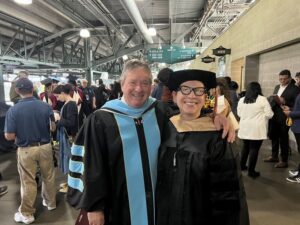


Turn your passion for helping students thrive into a rewarding teaching career with a Master in Teaching (MIT) from City University of Seattle. Designed for students who already hold a bachelor’s degree, the program allows you to earn a master’s degree while preparing for Washington State teacher certification.
Choose up to two endorsement areas, including Elementary Education, Special Education, Multilingual Education/ELL, and Reading. Through coursework and hands-on classroom experience, you’ll learn to create equitable, engaging learning environments where students feel seen, supported, challenged, and inspired.
With online and Saturday classes, the MIT program is designed to fit around your schedule. Courses are taught by experienced educators who bring current, real-world perspectives into the classroom.
Mixed Mode MIT
The mixed-mode MIT option combines online learning with in-person classes, giving you the flexibility of online coursework along with the connection and support of local faculty. You’ll work with dedicated faculty mentors throughout your coursework and internship experiences.
Vision
We envision a diverse educator workforce that reflects and serves today’s PK–12 students. Our teacher preparation programs cultivate inclusive, relationship-centered learning communities and prepare educators to create culturally sustaining classrooms where students can develop a strong sense of identity, belonging, curiosity, and connection to their communities and the wider world.
Mission
Our mission is to prepare thoughtful, effective educators through relevant, relationship-based learning grounded in culturally sustaining and identity-affirming practices. Future teachers develop the knowledge, instructional strategies, and self-awareness needed to create equitable, engaging, and high-quality learning experiences for every student.
The Master in Teaching program is designed for people who hold a bachelor’s degree in any field and are ready to become certified teachers. Through the program, you can earn a master’s degree while becoming eligible for a Washington State Residency Teaching Certificate.
Choose from nine endorsement combinations, with both single- and dual-endorsement pathways available.
You’ll build classroom experience progressively through four internships and student teaching. The program includes more hands-on classroom experience than the Washington State minimum requirement, giving you opportunities to apply what you learn, develop your teaching practice, and earn academic credit along the way.
Admissions requirements: A bachelor’s degree from an accredited institution.
Learning Outcomes
Throughout the MIT program, you’ll develop skills and knowledge in:
- Strategies for co-creating learning spaces that are culturally-sustaining and identity-affirming for all students
- Student-centered instructional design, implementation, and assessment practices
- Inquiry and project-based learning methods
- Identity development and deepening your own equity literacy
- Science of Reading pedagogy
- Historical, legal, and sociopolitical foundations of the educational system in the United States
IDA Accreditation
The MIT Reading endorsement is accredited by the International Dyslexia Association (IDA), reflecting the program’s alignment with research-based approaches to literacy instruction. The Reading endorsement can be paired with:
- Elementary Education + Reading
- Special Education + Reading
- Multilingual/ELL + Reading
Note: Statement on 34 CFR 668.43(a)(5)(v) and 34 CFR 668.43(c). Candidates of City University of Seattle Teacher Certification Programs, complete requirements to be recommended for certification or endorsement in the state of Washington. Except for Washington State, CityU has made no determination if this program will lead to licensure in another state. Please reference the resources below to determine licensure requirements and/or transfer policies in states other than Washington. The National Association of State Directors of Teacher Education and Certification (NASDTEC) have negotiated licensure reciprocity agreements among states. This means that if you earn licensure in Washington you may be able to gain licensure in another state based on proof of a valid Washington license. NASDTEC agreements can be found by clicking the following link. Requirements for licensure can change without notice, therefore it is important to contact the State Department of Education to confirm reciprocity in another state.