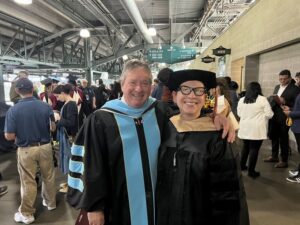
Among all of this uncertainty, more and more working-age adults wrestle with a big question:
“Should I go back to college?”
Whether you’re 20 or 40, or even older, you’re by far not the only one asking that question. This guide is here to help potential students of any age explore the pros and cons of pursuing higher education.
What Going Back to College Could Mean for You
There is no shortage of compelling reasons for college. One of the most popular is career success, which includes the opportunity to climb the ladder, secure a more stable job, and potentially earn a higher income.
While a college degree never guarantees career advancement, the numbers favor degree-holders. According to the Association of Public and Land-Grant Universities, someone with a bachelor’s degree earns an average of 86% more than a high school graduate — a typical increase of $40,500.
Some adults pursue college to enhance their skills in their current industry, working toward a more specialized role. A bookkeeper might learn about asset classes and securities investments, while a school secretary works toward teacher certification.
Other adults return to school to change careers entirely. The average age for a career-switcher is 39, with those in midlife being the most likely to consider a change.
Whether you’re looking to pivot or advance, college can be an excellent opportunity for networking and personal growth. The learning experience is fulfilling in itself and can benefit you professionally wherever you go. In this era of rapidly evolving technology, employers always want people who are eager to learn.
So, yes. You can go back to college after graduating. You can go back if you didn’t finish or never started. The question is whether it’s the right decision for you.
What Might Hold You Back
If college were easy, most people would do it without hesitation. However, there are real logistical, personal, and financial concerns to consider before committing.
First, there’s cost. Although some options are more affordable than others, a college education is notoriously expensive. The Education Data Initiative estimates that the average tuition price for an in-state student at a public university is $9,750 per year, plus fees and any room and board costs.
Student loans can help, but many Americans have concerns about taking on student debt. New federal legislation has reduced the availability of student loan forgiveness and altered the rules on debt cancellation for borrowers in income-driven repayment plans. If you’re considering taking on debt to pay for college, you’ll want to research these new rules and thoroughly understand what you’re taking on.
Then, there’s the time commitment. Make sure you have enough time to balance school, home, and any paid work hours you plan to keep up. Experts generally recommend two hours of study time for each class hour.
How to Weigh the Decision: Practical Tips
As you consider returning to school as an adult, focus on your individual circumstances. Weigh the pros and cons, consider your timeline, and don’t forget to crunch the numbers.
Pros and Cons of Going Back to College
Begin your decision-making process by reviewing the advantages and disadvantages of college, focusing on how important each point is to you. Here are a few examples to get you started.
Pro: Career Advancement
If you want a college degree for career reasons, get specific about your goals. Identify the job you want and research the requirements. Look at whether a degree is required or puts you at a considerable advantage.
Pro: New Skills
Identify what you want to do with those skills. Are there competencies you need to succeed at work, or is there something you’ve always wanted to learn? Weigh that skill against your other priorities.
Pro: Personal Fulfillment
A sense of accomplishment is a perfectly valid reason to go back to college. Does it make sense for you, personally?
Con: Cost
Going back to school requires financial sacrifice. Ask yourself if the lifestyle adjustments are worthwhile to you and any family members your decision would affect.
Con: Time commitments
Doing one thing inevitably means not using that time for something else. If you go back to college, what would you give up to make room for classes and homework? Consider what that sacrifice means for you and the people in your life.
If you consider all these points carefully and are honest with yourself, there’s no “right” or “wrong” answer.
Self-Assessment: How to Know if It’s the Right Time
The question isn’t only whether or how to go back to college, but when. Whether you’re looking at the benefits of a graduate degree or wondering how to go back to college after dropping out, ask yourself these key questions:
- What’s my “why”? Someone with ambitious career goals might feel more time pressure than someone primarily seeking personal fulfillment.
- Do I need a college degree to reach my career goals? If you need a credential quickly, look at options for professional certificates. If you’re changing fields or aiming significantly higher than your current role, consider a degree.
- What are my current commitments? Consider how your life might change in the coming years. If you’re 32 with two kids under 5, you might decide to wait on that degree. If you’re child-free or looking ahead to an empty nest, you might be ready to jump in.
Cost vs. Benefit: Run the Numbers
College is an investment, but it could pay off in future earnings. Adults with bachelor’s degrees earn a median of $1.2 million more over the course of their lifetimes, and their self-reported financial health is 20 points higher than that of any other group.
To determine if you can handle the investment, calculate the total cost and assess how much aid you’ll need. There are plenty of financial aid resources out there:
- Federal student aid: Grants, loans, and other aid programs are available for students at all levels. Consider applying to the Free Application for Federal Student Aid (FAFSA).
- Tuition reimbursement: Some employers will cover the cost of college at a credentialed institution.
- Scholarships: There are countless private scholarship programs for students at all levels.
City University of Seattle is committed to making a college education accessible and affordable. See our financial aid resource page to learn more about affordable grants, loans, and payment plans.
Flexible Paths for Adult Learners
If college is the right path for you, there are plenty of options to make it fit your life. After remote learning gained popularity during the social distancing era, many colleges continued incorporating it into their degree programs.
Numerous colleges, including CityU, offer flexible learning programs that allow you to earn your degree while continuing to work. You can find weekend and evening classes, enroll in accelerated certificate programs, and earn your credential on your terms — whatever those might be.
There are options for nearly everyone. One person may ask, “Should I go back to college at 30?” and find an online program that lets them stay home with their newborn. Another considers community college at 40 and finds an associate’s degree program they can complete after work.
The key is finding a program that respects your life experience and accommodates your needs. Look for schools like CityU that offer college tips for nontraditional students and provide empathetic, realistic support.
How CityU Helps You Balance Life and Learning
At CityU, we believe college is for everyone. We offer flexible scheduling, online and hybrid formats, and career-focused programs that suit your goals.
Each CityU student has access to an academic advisor who understands the unique challenges they face, as well as a career counselor who offers personalized guidance. If you decide to pursue a degree or a professional certificate, we’re here to work alongside you and help you succeed.
Explore our online degree programs and certifications today or request information. Your future is in your hands — however you decide to move forward.