 Student Login



Master of Arts in Counseling

Next start:
October 2027
Format:
Mixed Mode
Total Courses:
24 (90 credit hours)
Tuition:
$725 per creditProgram Overview
City University of Seattle’s Master of Arts in Counseling prepares you to work as a licensed mental health professional in clinical settings or as a professional School counselor in K-12 schools. You’ll choose between two Council for Accreditation of Counseling and Related Educational Programs (CACREP)-accredited tracks, Clinical Mental Health Counseling (CMHC) or Professional School Counseling (PSC), depending on where you want to practice.
The CMHC track prepares you for Licensed Mental Health Counselor (LMHC) licensure in Washington State. LMHC work in community mental health agencies, private practice, addiction treatment centers, hospitals, and social services organizations. The PSC track prepares you for Educational Staff Associate (ESA) certification to counsel students in K-12 schools across Washington.
Both tracks center on social justice, exploring how factors like race, poverty, and gender influence mental health. Our faculty members are active counselors who understand the ethical and cultural complexities of clinical practice.
The program uses a practitioner-scholar model. While you’ll study theory, the main focus is building real clinical skills: case conceptualization, therapeutic communication, crisis intervention, and trauma-informed care.
Skills You’ll Gain
The MAC program builds clinical competencies required for licensure and effective counseling practice. You’ll develop skills through coursework and supervised practice in real counseling settings.
- Conduct clinical interviews and use current DSM criteria to form diagnostic impressions.
- Respond to mental health emergencies and assess suicide risk appropriately.
- Apply interventions that promote healing without causing retraumatization.
- Apply the ACA Code of Ethics to complex professional situations.
- Build rapport and apply evidence-based interventions with diverse client populations.
- Recognize your own biases and work effectively across different backgrounds.
- Integrate theory and assessment data to develop effective treatment plans.
- Design and lead therapeutic groups that support shared healing.
Program Highlights

CACREP-Accredited Pathways
Both the CMHC and PSC tracks meet national accreditation standards.
Social-Justice-Centered Curriculum
In every course, you will learn how to tackle the systemic inequities and cultural factors that impact a person’s mental health and facilitate a deeper understanding of your own cultural identities.
Mixed-Mode Format Supporting Working Adults
Saturday class meetings and weekly online work give you the flexibility to manage school and your career while keeping up with your personal life. Certain classes meet in person on Satrudays; talk to an advisor to see the most current schedules for your cohort.
Practitioner Faculty
Learn from counselors who are actively working in the field and understand the realities of clinical practice.
Hands-On Clinical Experience
Complete supervised practicum and internship hours in real counseling settings before graduation.
Course Requirements
The 90-credit program moves you through foundational coursework, core counseling courses, specialized training in your chosen track, supervised clinical practice, and a capstone project. You’ll start with theory and skills, then apply everything in real counseling settings under supervision. Highlighted courses below, for full course requirements please refer to the current catalogue.
Foundations and Core Counseling Courses
Coursework is based on CACREP core content areas including ethics and professional practice, multicultural responsiveness, human growth and development, career development, counseling theory and skills, group counseling, testing and assessment, and research and program . These lay the groundwork for clinical practice. You’ll also take courses in trauma and crisis management, human sexuality, and other specialty topics. .
Specialization Coursework
CMHC Track: This track readies you for work in private practices, hospitals, and community agencies. You will explore advanced therapy techniques and counseling for addictions. Your classes also include applied behavior analysis. This training prepares you to help people struggling with depression or anxiety.
PSC Track: You’ll spend your time here focusing on K-12 school counseling. The program shows you how to start counseling initiatives and handle educational planning. You’ll also learn about crisis intervention and how to work with kids and teens. This training prepares you to help students succeed in class and grow emotionally.
Practicum and Supervised Internships
You’ll complete a supervised practicum where you begin providing counseling services under close faculty oversight. After demonstrating competency, you’ll move into supervised internship placements where you accumulate the clinical hours required. CityU’s field placement coordinators help you find sites aligned with your track and career goals.
Social Justice
You will gain real experience in the community engaging in advocacy and social justice work. You will work with your faculty advisor to identify opportunities aligned with your track and interests.
Capstone Course
5 credits
Your capstone project integrates everything you’ve learned. You’ll demonstrate your ability to conceptualize cases, apply ethical standards, and deliver culturally responsive counseling.
Career Opportunities
A master’s degree in counseling prepares you for licensure as a mental health professional or certification as a school counselor. CMHC graduates can pursue Licensed Mental Health Counselor (LMHC) licensure in Washington State and work in clinical settings. PSC graduates earn Educational Staff Associate (ESA) certification to counsel students in K-12 schools. Demand for both mental health counselors and school counselors is strong in Washington and nationwide.
Job Growth
12%
per year
The U.S. Bureau of Labor Statistics projects the continued growth of 12 percent in the field.
Alumni Employment
74%
employed
74% of CityU alumni are employed in a field related to their degree.
Salary Growth
86%
of alumni
86% of CityU alumni saw a salary increase within two years of graduation. The average salary increase was 58%!

Career Support & Networking
Join a global network of 63,000+ CityU alumni, with graduates at leading companies worldwide. Through CityU Connect, you’ll have access to mentorship, career services, and a community dedicated to helping you advance.
Our graduates put their skills to work at leading employers across the Pacific Northwest and beyond.





Where this degree can take you:
Mental Health Counselors
Mental health counselors provide therapy to individuals, families, and groups dealing with mental health challenges, trauma, addiction, and life transitions. LMHCs- work in community mental health agencies, private practice, hospitals, addiction treatment programs, crisis centers, and veteran services. You might specialize in working with specific populations such as child and adolescent counseling or couples counseling, or in certain treatment areas such as, substance use treatment or truama.
Median Salary
$59,190
Projected Job Openings
76,000 annually
School Counselors
School counselors support K-12 students with academic planning, social-emotional development, and career readiness. ESA-certified school counselors help students navigate challenges at home and school and address anxiety and depression, working to create safe spaces where students can thrive. You’ll work directly in elementary, middle, or high schools across Washington.
Median Salary
$65,140
Projected Job Openings
35,000 annually
Substance Abuse and Behavioral Disorder Counselors
Substance abuse counselors work with clients recovering from addiction and guide them in developing healthy coping strategies. You’ll work in residential treatment facilities, outpatient programs, hospitals, and community health centers. Being an LMHC qualifies you to provide individual and group therapy focused on addiction recovery and relapse prevention.
Median Salary
$59,190
Projected Job Openings
28,600 annually
Salary and job openings data sourced from the U.S. Bureau of Labor Statistics Occupational Employment and Wage Statistics (OEWS), May 2024. Figures reflect national median annual wages at that date and projected annual job openings from 2024-2034, averaged by year.
Apply Today. Graduate Sooner.
10-week quarters for most programs allow you to complete your degree faster. Apply today for FREE.
Next start date:
October 2027Personalized Support From Enrollment to Graduation
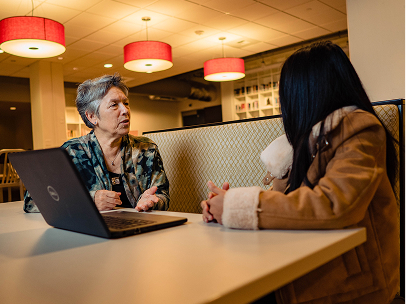
CityU’s advisors provide personalized support throughout your program. You’ll start with an enrollment advisor who helps you pick the right track and handles your initial paperwork.
Once your classes begin, your academic faculty takes over to help you map out your course sequence and hit your deadlines. These advisors also help you navigate the specific rules found in the student handbook. They help you make sure you are meeting every clinical and academic benchmark required to earn your degree.
Field placement coordinators support you during practicum and internship. They help you identify sites that meet required educational criteria, complete required paperwork, and connect with supervisors who provide mentorship and clinical training. CityU has established relationships with community agencies, schools, and mental health organizations across the Seattle area.
Your instructors will be practicing counselors who understand what it takes to succeed in the field. They provide feedback on your clinical skills, help you reflect on your own growth as a counselor, and prepare you for the realities of working with clients who are hurting, resistant, or in crisis.
Small cohorts mean you’re not lost in a crowd. You’ll build relationships with classmates who become colleagues and friends.
The mixed-mode format respects your life. Saturday classes give you face-to-face learning and connection. Asynchronous coursework lets you engage during the week when it fits your schedule
Tuition & Financial Aid
CityU is committed to making the MAC program accessible to students from all backgrounds. Tuition is $725 per credit for 90 credits, which totals $65,250 for the full program. That’s competitive for a CACREP-accredited counseling program in the Pacific Northwest.
Many students use a combination of federal financial aid, employer tuition benefits, scholarships, and private loans to fund their degree. If you’re working in social services, education, or healthcare, check with your employer about tuition reimbursement opportunities.

Tuiton Estimator
Our tuition calculator can help estimate your tuition for this program, including scholarships and financial aid.
Ways to Save on Tuition
You may reduce the cost of your program with these options.
Financial Aid
Complete the FAFSA to find out if you qualify for federal student aid, including loans and grants. Many students use these financial aid opportunities to cover a significant portion of their program costs.
School code: 013022
Military Tuition Benefits
CityU supports veterans and active-duty service members pursuing degrees. We accept military tuition benefits, VA benefits, and military partnership programs to help reduce costs for those who have served.
Transfer Credit Options
You can transfer up to 12 graduate credits from accredited programs toward your requirements. This reduces both the time to complete your degree and your overall tuition expenses.
Scholarship Opportunities
CityU offers a variety of scholarships to help make education more accessible.
Life at CityU: Student Perspectives
As a CityU counseling student, you join a community that cares about mental health and social justice. Your cohort acts as a vital support system. Together, you will work through difficult cases and reflect on your personal growth as you become a better counselor.
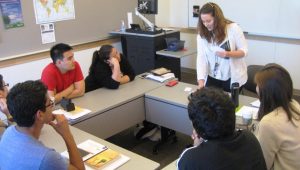
Saturday classes bring everyone together for discussions, role-plays, and skill-building exercises. You’re practicing therapeutic techniques, getting feedback from faculty, and learning from peers who bring different perspectives and experiences. Asynchronous coursework gives you time to read, reflect, and engage with the material at your own pace during the week.
Faculty build a culture where you have to be honest with yourself. You will look at your own biases and triggers because great counselors need to know how their own life experiences affect their clients. That kind of deep work is tough. However, it is exactly what helps you sit with a client’s pain or uncertainty without losing your footing.
Clinical training involves practicing your skills and getting direct feedback from your supervisors. You’ll refine your approach based on that guidance. The program requires logging supervised clinical hours working with clients in real therapy settings.
Your Next Steps
We made the path to your Master of Arts in Counseling simple:
Connect with an Advisor
Submit Your Application
You’ll need an accredited bachelor’s degree and your official transcripts to get started. We also ask for a personal statement about why you want to be a counselor, and you might have an interview with us. Review what competitive MAC candidates bring to the application.
Complete Supplemental Documents
Submit Supplemental Admissions Documents to your Enrollment Advisor.
Receive Your Start Date
Once admitted, you’ll work with an advisor to review your course sequence and prepare for your start date.
Begin Your MAC Journey
Show up ready to learn, reflect, and do the hard work of becoming a counselor who can hold space for others.